
Driving the Transition Toward a Nature-Positive Economy: From Principles to Measurable Action
18 February 2026
by Marcelo Gerlach and Eugenio Vassallo, ICLEI
In recent years, the concept of a Nature-Positive Economy (NPE) has gained increasing political attention across Europe.
At the 49th Breakfast at Sustainability, held at ICLEI Europe’s Brussels office, experts and stakeholders explored how this concept can move from ambition to implementation.
A central message emerged: clear and practical indicators are essential if Europe is to shift from nature-negative to nature-positive economic activities.
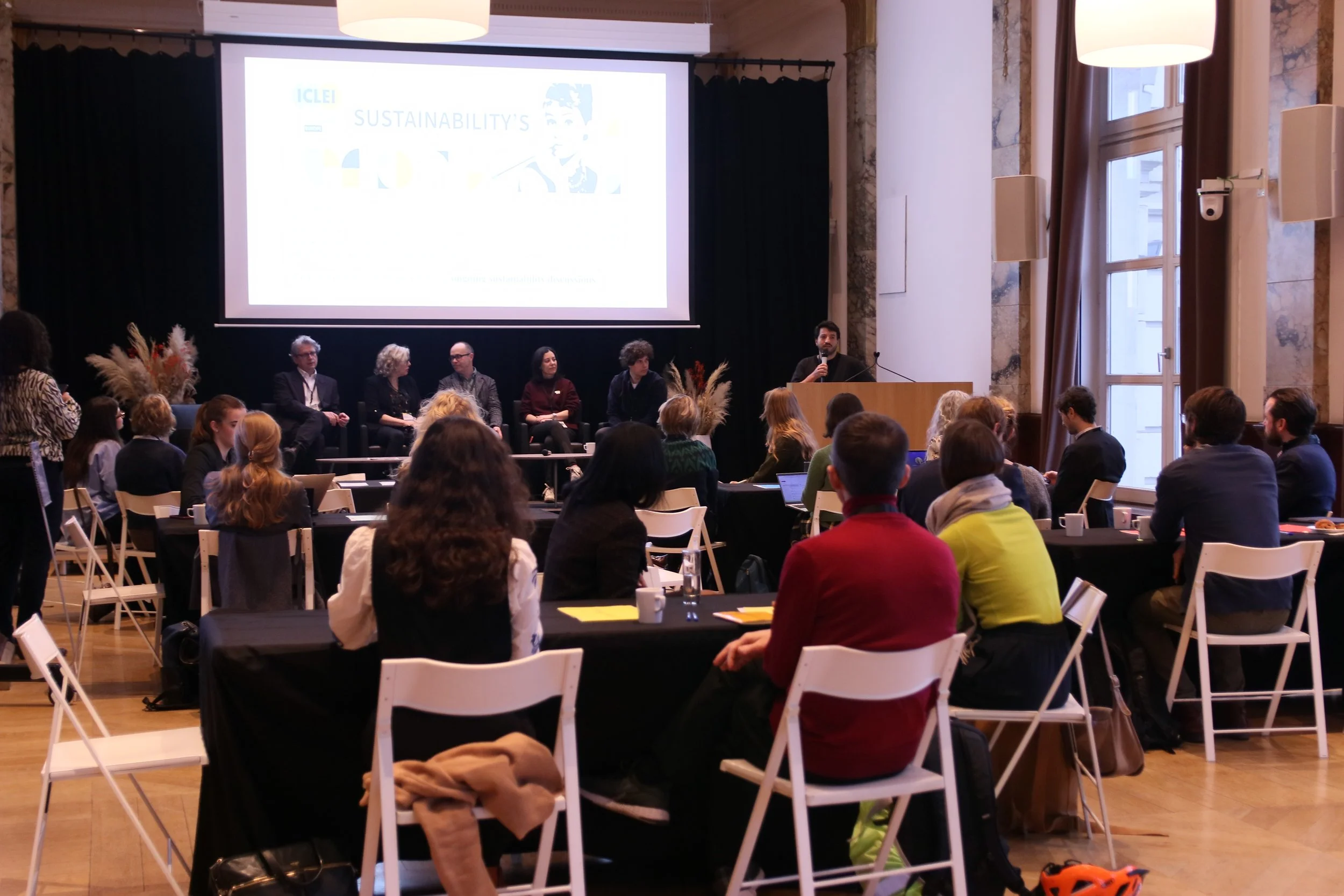
49th Breakfast at Sustainability, ICLEI Europe’s Brussels office
Marianne Zandersen from Aarhus University and Francesca Magnolo from the Research Institute for Nature and Forest - Instituut voor Natuur- en Bosonderzoek presented the Nature-Positive Economy concept note, as well as the Guiding principles and first set of operational indicators for measuring progress towards the NPE.
The framework centers on five pillars:
Full recovery of nature
Prosperity for all
Respecting ecological limits
Transforming economic systems
Ensuring a social foundation
While participants broadly agreed on the ambition and relevance of these principles, discussions about implementation took center stage.
Across breakout groups, stakeholders from finance, insurance, business, academia, local authorities and civil society examined how these principles can be translated into operational indicators and governance tools.
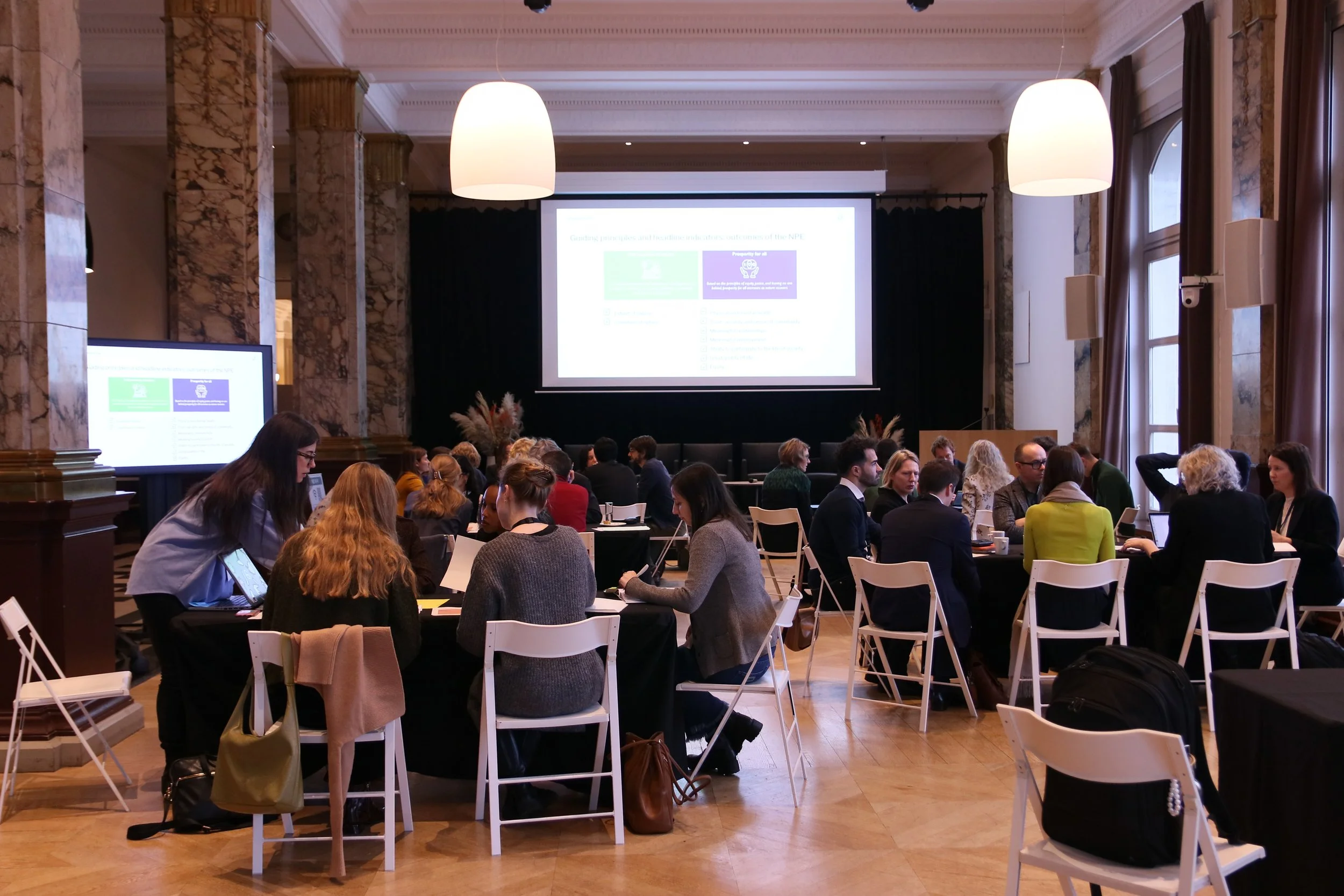
49th Breakfast at Sustainability, ICLEI Europe’s Brussels office
Key industry demands emerged from the session:
Financial and insurance actors highlighted the need for nature-based risk models, governance clarity, and context-specific indicators.
Businesses emphasised the importance of treating nature loss as a systemic economic risk and stressed alignment with frameworks such as Taskforce on Nature-related Financial Disclosures (TNFD) and the EU Taxonomy.
Civil society stakeholders called for a minimum core set of indicators to prevent greenwashing and avoid metric overload.
Landowners representatives underlined the need for practical, place-based guidance that can support everyday decision-making, as well as collective governance models to enable coordinated action.
As the recently released IPBES Business and Biodiversity Assessment highlights, financial systems continue to channel trillions into activities harmful for nature, while investment in biodiversity protection remains limited.
Redirecting these flows requires measurable frameworks and accountability mechanisms, precisely the gap the Nature Positive Economy Guiding Principles aim to address.
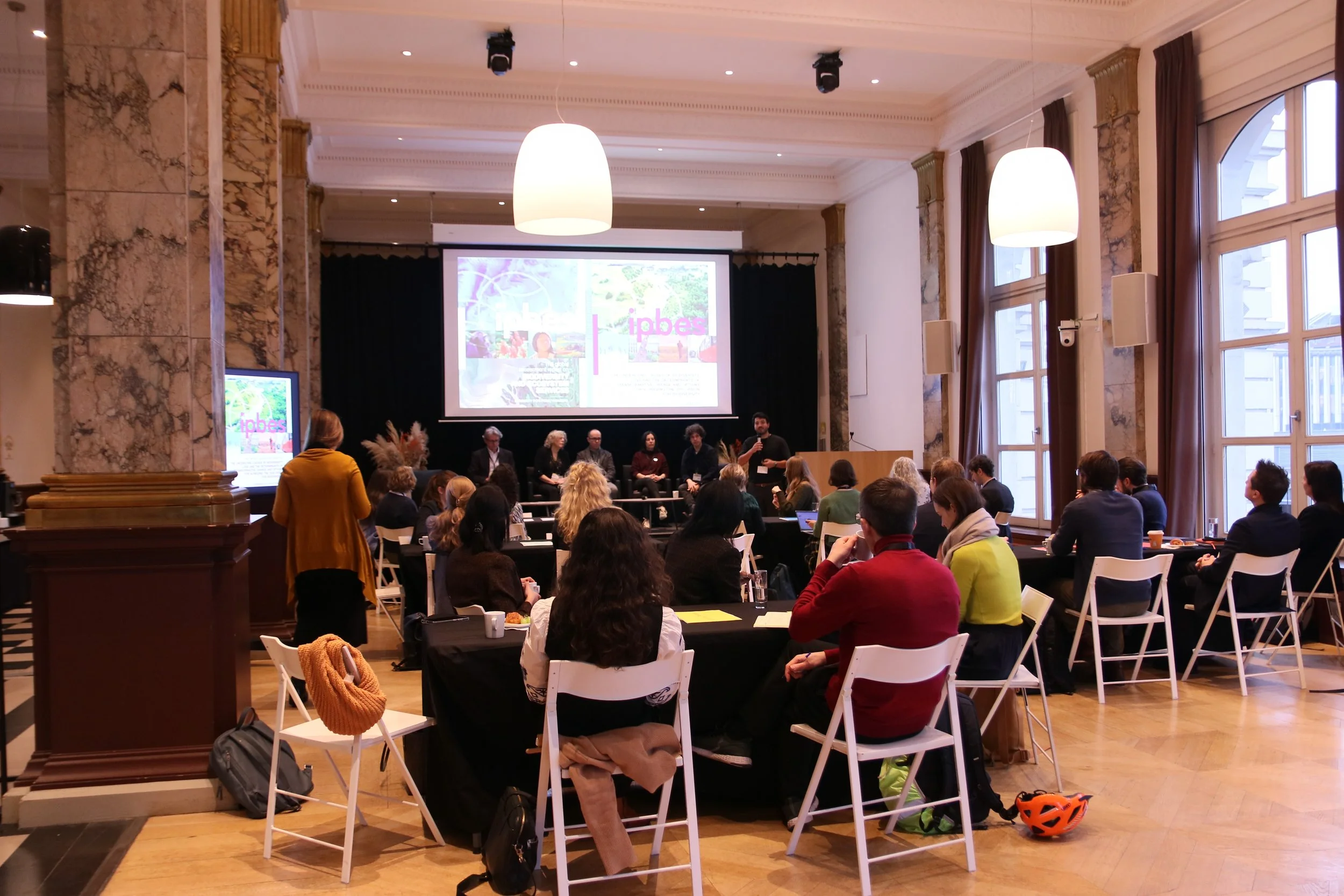
49th Breakfast at Sustainability, ICLEI Europe’s Brussels office
In the final session, participants reflected on how science-based policies could shape a Nature-Positive Economy by 2050. Ideas included integrating nature-related disclosures into financial regulation, shifting public incentives toward nature-positive activities and moving beyond GDP toward broader wellbeing indicators. Despite different perspectives, one shared conclusion stood out: nature must be embedded as a foundational pillar of economic, political and social systems, not treated as a standalone policy issue.
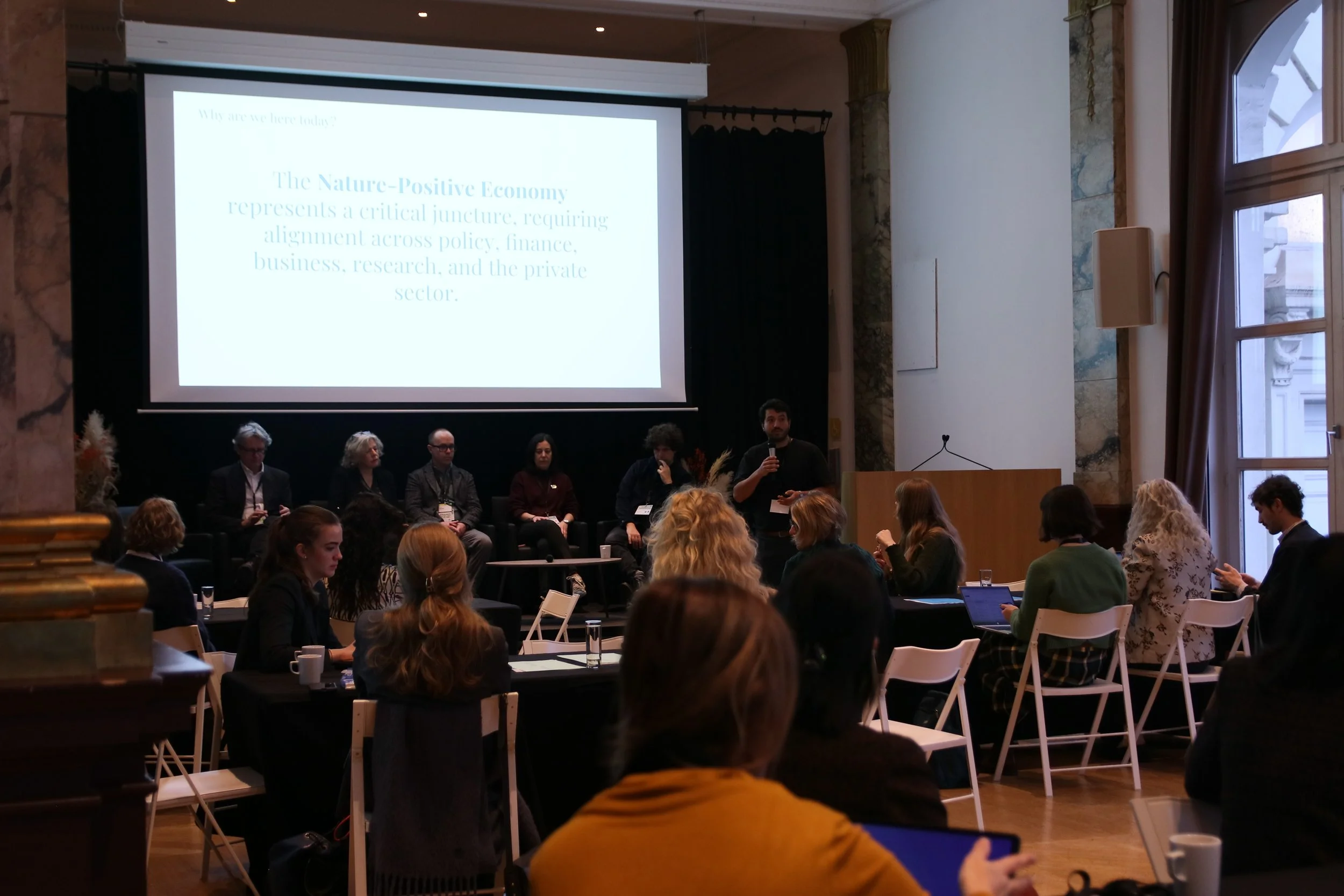
49th Breakfast at Sustainability, ICLEI Europe’s Brussels office
Everyone has a role to play in advancing a Nature-Positive Economy, from citizens and communities to businesses, investors, policymakers, researchers and standard bodies.
Join the GoNaturePositive! Community to be a part of the movement for a nature-positive future and help drive meaningful change for people and nature.